No-code Experimentation
A guided experimentation sandbox for testing, prototyping, and debugging workflows with AI assistance.
Problem
Good documentation and local tooling still leave a final gap: people need a place to try things, compare responses, and debug workflows without committing directly to application code. That is especially true for stateful integrations, where workflows are sequential, contextual, and easy to misunderstand until you can actually run them. Without a trusted experimentation sandbox, users fall back to trial-and-error or rely heavily on support engineers. I wanted to make testing and debugging part of the product, not an afterthought — turning a validated plan from collaborative planning into something a team could actually exercise.
Solution
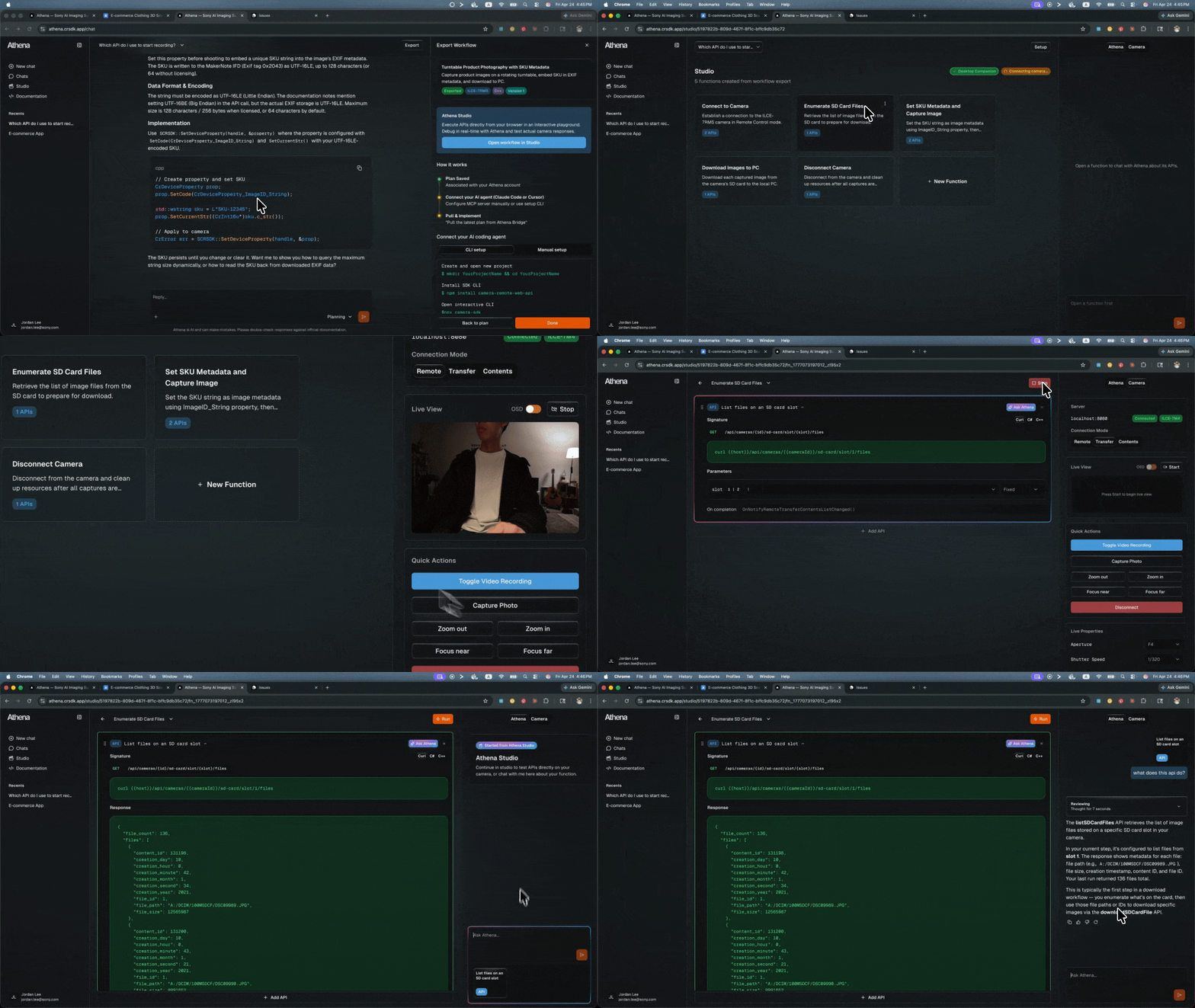
I built Athena Studio as a no-code experimentation sandbox for the platform: a place where people can browse APIs, run live requests, prototype workflow steps, and debug behavior with AI assistance without writing integration code first. It gives users a more direct path from “I understand the plan” to “I can test whether this actually works.” Studio ties back to the collaborative planning context so workflows do not have to be reinvented from scratch, and the patterns proven here feed forward into the workflow integrations developers ship locally.
Design & Technologies
Athena Studio was built as a polished web application on top of the REST client surfaces, with workflow-oriented UI components rather than a generic API console. The technical stack mattered, but the more important design choice was treating debugging and experimentation as a guided experience instead of raw request execution. That meant combining endpoint access, workflow sequencing, and AI-assisted suggestions in one place so users could move from isolated calls to realistic integration testing. In practice, the product behaves more like a workflow lab than a traditional API reference.
Role
I led the product definition for Studio with a specific focus on workflow and automation UX: where developers get stuck, which failure points repeat, and which edge cases AI can help resolve in the moment. As with the other case studies, I owned problem discovery, AI prototyping, feature scoping, roadmap direction, and observability strategy across experimentation and agent tracing. I used Claude Code and Codex to accelerate the production build, then worked with engineers to validate execution flows, UI behavior, and debugging scenarios before rollout. My role here was to turn testing and debugging into a first-class product experience instead of a support burden.
Trade-offs & Prioritization
I prioritized a trustworthy experimentation loop over fully autonomous generation, because the user still wanted control over what the workflow actually did. That meant focusing on high-signal testing, workflow prototyping, and debugging support instead of trying to auto-generate entire applications from prompts. I also chose to keep Studio connected to the broader Athena workflow rather than making it a standalone playground, because experimentation is strongest when it builds on prior planning context. The trade-off was a narrower but more reliable product experience for the intended audience.
Lessons & Improvements
One of the clearest lessons was that developers build conviction by trying workflows themselves, not just by reading polished docs or generated plans. AI is most useful here when it accelerates debugging and next-step reasoning, not when it tries to take total control away from the user. If I were continuing this work, I would strengthen the path from planning artifacts into executable Studio workflows so the transition from concept to test is even shorter. I would also invest further in safer execution surfaces and richer observability so debugging insight compounds over time.