Collaborative Planning
A shared planning layer for turning fragmented information into diagrams, artifacts, and workflow decisions teams can actually reuse.
Problem
At Sony, I realized the hardest part of complex enterprise workflows is often not writing code, but getting multiple people to agree on what the workflow actually is. Product managers, support teams, sales engineers, and developers were all reading different slices of fragmented information, so planning conversations stayed trapped in chat threads, screenshots, or a single engineer’s mental model. That made it hard to scope an integration, compare options, or circulate a shared understanding across a team. I saw collaborative planning as a product problem, not just a documentation problem — and one that depended on the retrieval and tool infrastructure already in place.
Solution
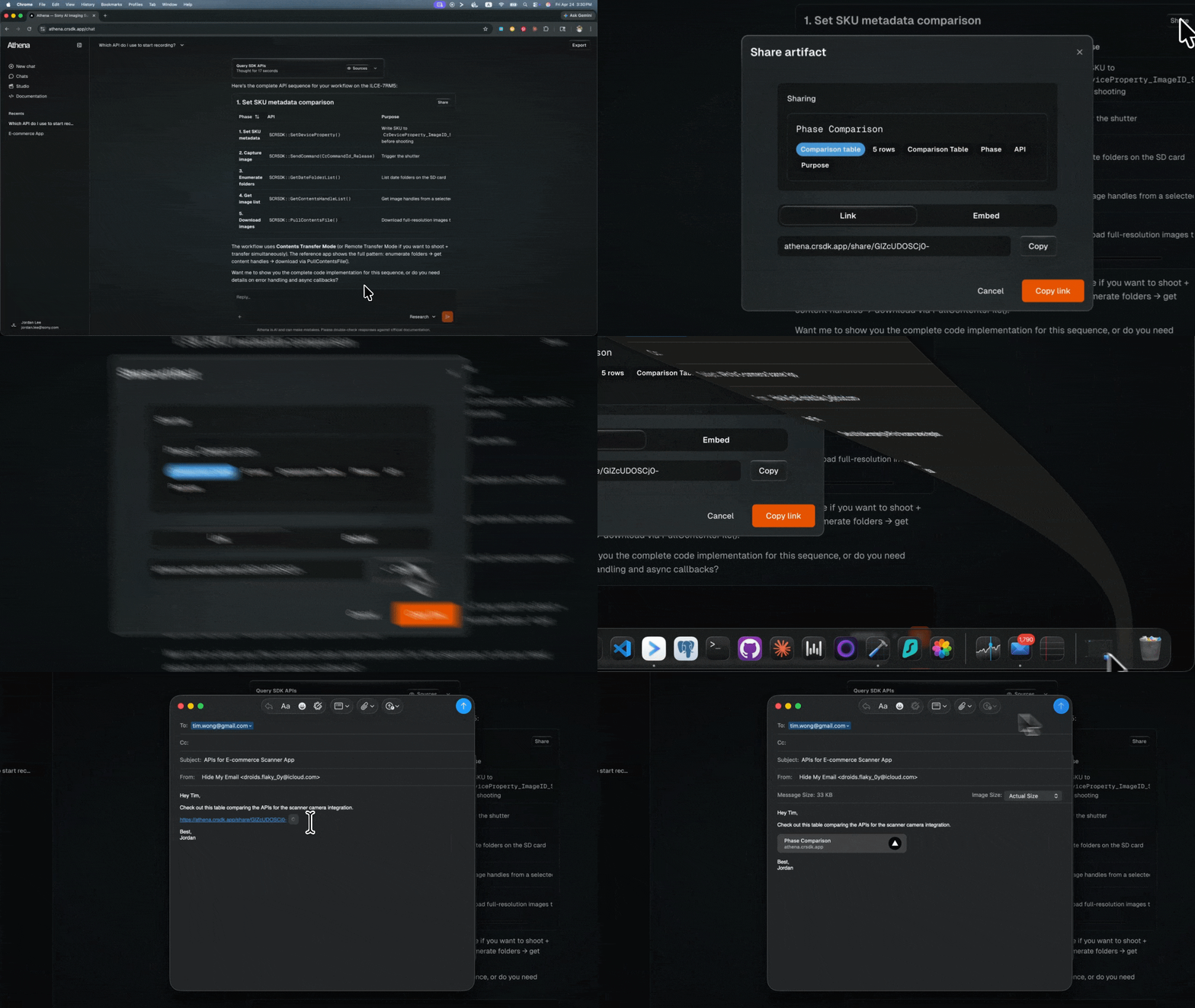
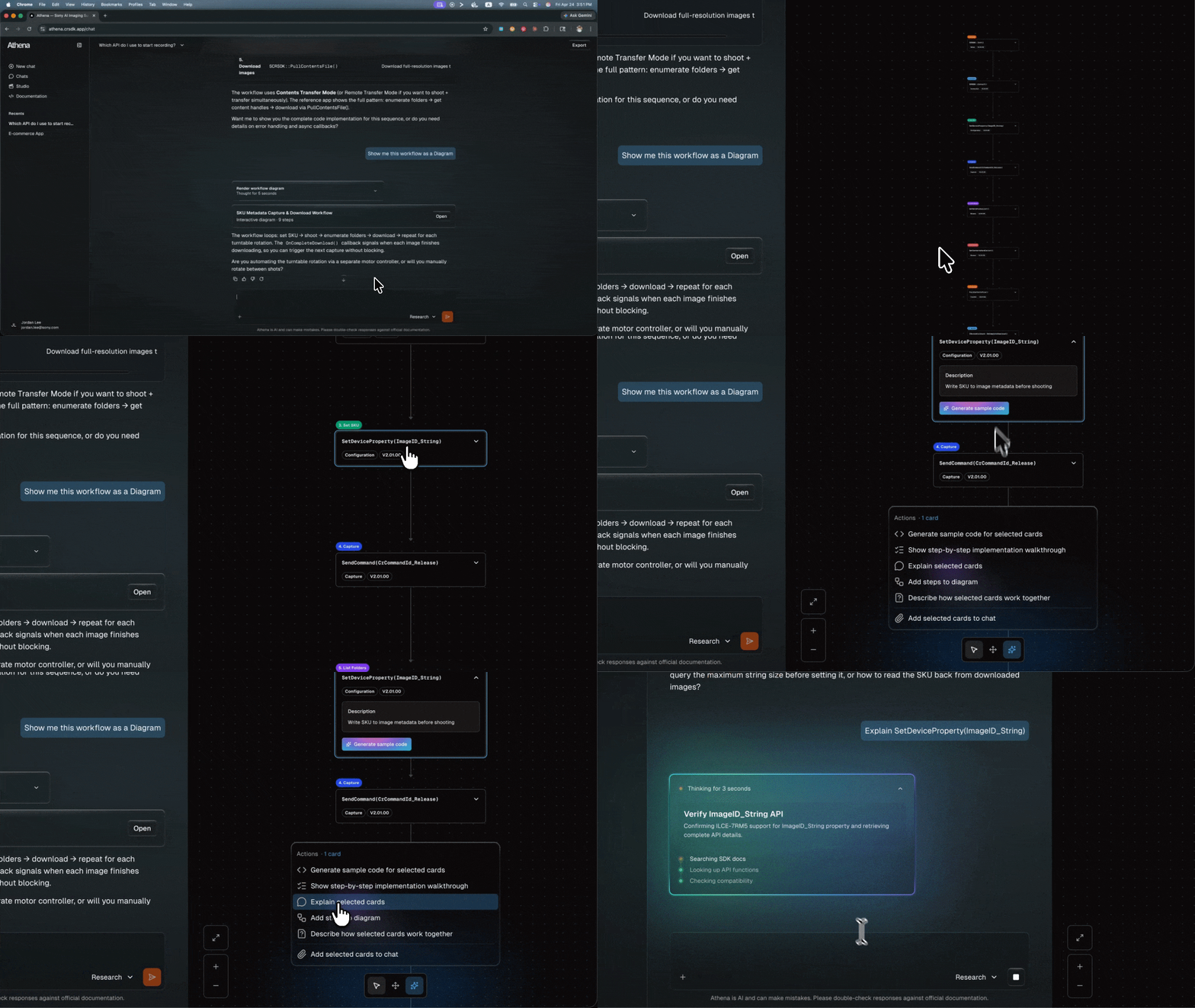
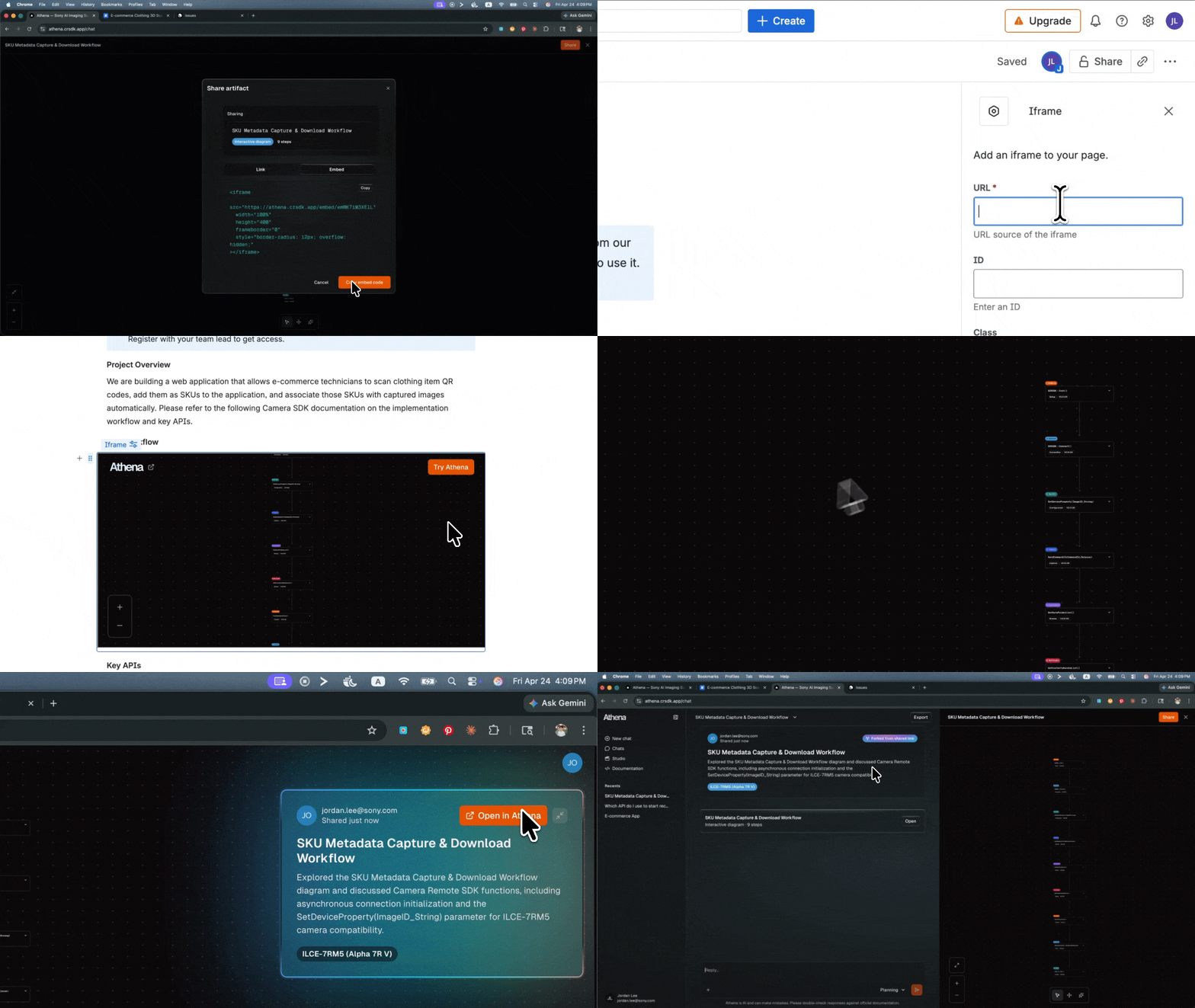
I built Athena Chat and Diagram as a workflow-planning surface that starts with clarifying the user’s goal, then turns grounded answers into diagrams, tables, and structured planning artifacts. Instead of stopping at a good answer, Athena was designed to produce outputs that could be shared, revisited, and embedded in other contexts. That included shareable links, interactive workflow questions, table sharing, and diagram embed/export features so planning outputs could travel beyond the original chat. Once a workflow was documented and aligned, it could move directly into implementation handoff.
Design & Technologies
This layer was built as a Next.js application with streaming chat, custom React and Tailwind UI components, persisted state, and visual workflow rendering. I used agent orchestration to drive clarification, retrieval, and structured output generation, but the product design centered just as much on shareability, persistence, and transparency as on the model itself. Auth, storage, and collaboration features were treated as core product infrastructure because planning only becomes valuable when teams can actually reuse it. The main UX pattern was to make the agent produce explicit artifacts instead of leaving important decisions buried in a long conversation.
Role
I led the product thinking for this layer: requirements gathering, problem framing, AI prototyping, and the roadmap for how Athena should support collaborative planning rather than just single-user Q&A. My specific focus was on information visualization, iteration loops, and sharing UX, with heavy involvement in UI polish, testing, and making outputs understandable to both technical and non-technical users. I also shaped the underlying agent workflow and observability strategy, then used Claude Code and Codex to accelerate production implementation while partnering with engineers on review and testing. This was the most design-heavy part of the platform and the place where I spent the most time refining user trust and clarity.
Trade-offs & Prioritization
I prioritized visual trust and shareable artifacts over maximum speed, because adoption depended on helping mixed technical and non-technical teams reason together. That meant spending time on diagrams, sources, and export/embed flows rather than chasing every possible agent capability early. I also chose explicit planning artifacts over hidden agent memory, even though that can use more context, because distributed teams needed a clear source of truth. The trade-off was a slightly more structured workflow in exchange for better collaboration and easier handoff.
Lessons & Improvements
The biggest lesson was that collaborative planning tools only work when they produce something people can carry into the next meeting, document, or implementation step. Users did not just want better answers; they wanted a planning surface that could hold team alignment and survive outside the original session. If I were improving this area further, I would make collaboration loops even more structured, especially around commenting, versioning, and turning planning artifacts into downstream executable workflows. I would also continue tightening the relationship between visual outputs and source evidence so trust scales with complexity.